For those who are wondering what hole I fell into . . . I finally feel on the road to recovery from the cold (or whatever) that attacked me a week ago today and laid me flat. I've slowly and painfully crawled out of my hidey-hole and am emerging into the world again.
For those who thought I was in Arizona . . . nope. Couldn't go. Couldn't face the 13-hour drive, twice in five days. We're hoping for the first weekend in November, if weather permits. Because everything was in place for a visit with those we love and miss, it really hurt to have to postpone. Looking back on the last few days, though--it was for the best.
Watch for new postings within the next day or two, including a new chapter of Khyber Dreams.
Love to everyone. Stay healthy.
Tuesday, September 29, 2009

Sunday, September 20, 2009
Happy Birthday, Dearest. Bestest Friend!
September 21, 2009 - a very special day for a most special friend . . . and if I've timed things right, this will post at 12:01 a.m. on 9/21/09 in Israel.

I wish I could be with you today to celebrate in person. It's been way too many years since we've spent birthdays together, and I miss you a lot.
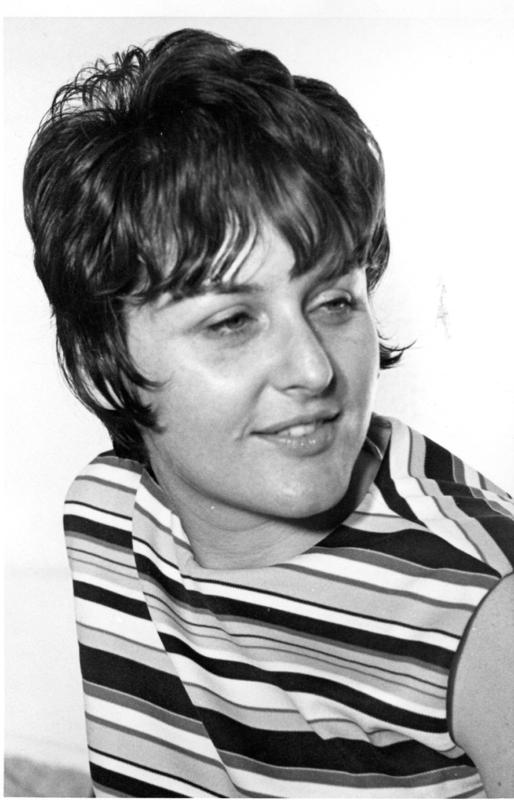
Writing this blog has made the memory juices flow in earnest, and over the last few days and weeks, I've been thinking about some of the wonderful places and people we've shared.
Do you remember . . .
Slipping and sliding through the snow in Fawnskin as we city girls watched the white stuff fall for the first time in our lives?
The Amtrak trip to Las Vegas, where I boarded in Santa Ana, you boarded in Santa Ana, and we picked up Bill and Rich in Ontario? What a wonderful, raucous party of four that was! It's a good thing the train pulled right into the Union Plaza Hotel; we couldn't have driven anywhere?
The Elton John concert in Dodger Stadium where the audience yelled and stomped so loudly as Elton sang "The Bitch is Back" that the stadium shook?
Twohey's?

That horrible drive back from Las Vegas where you pretended to be asleep the entire way?
Jesus Christ Superstar at the Universal Amphitheatre with Gail and Evita in Century City?
Looking for the Tate house in Benedict Canyon . . . and finding it (at least the gate)?
Dinners with Farida and Nas at the Hollywood Ol' Spaghetti Factory? In the days when there wasn't an Ol' Spaghetti Factory on every other corner . . .
Coming back from a Las Vegas trip to find that Auntie Flo had fed the girls bacon for the first time in their lives?
Checking out the vanity in Bill and Rich's bathroom--and having Bill come up behind us?
Sundays driving to Palos Verdes to buy strawberries and straw flowers?
Cutting class to drive down to Ports 'o' Call?
The Thanksgiving I removed the pumpkin pie from the oven and dropped it, steaming hot, onto my foot and had to wear socks to Thanksgiving Dinner 'cause I couldn't get my shoe on?
The holidays when Champ realized we had had too many glasses of wine and took the opportunity to take a nap on the bed?
Those Idyllwild weekends where we'd have to call to let work know we were "snowed in" because we couldn't bear to go home?

Three-hour telephone conversations?
The purple swan from Nellie?
Driving somewhere--I have no idea where--with Auntie Flo singing Old Macdonald's Farm at the top of our lungs?
The night Abid and I stayed overnight at the El Molino apartment and we slept in your bed, awaking absolutely petrified to find Poopsie staring at me?
Your wonderful Camaro?
Sharing a room at the Wawona Hotel, with a bath down the hall?
You, Doobie and me sitting at my dining room table during your visit to Bass Lake, watching the deer frolic outside?

There were many, many more people, places and events that we've shared over these almost-fifty years. I'm sure you can add to them.
If you never remember anything else, please know that I love you and cherish the years and the friendship we've shared. May this birthday be the best of all birthdays to date . . . and the least of those to come.
I love you, my friend.
meeeeeeeeeeeeeeeeeeeeeeeeeeeeeeeeeeee
Writing this blog has made the memory juices flow in earnest, and over the last few days and weeks, I've been thinking about some of the wonderful places and people we've shared.
Do you remember . . .
Slipping and sliding through the snow in Fawnskin as we city girls watched the white stuff fall for the first time in our lives?
The Amtrak trip to Las Vegas, where I boarded in Santa Ana, you boarded in Santa Ana, and we picked up Bill and Rich in Ontario? What a wonderful, raucous party of four that was! It's a good thing the train pulled right into the Union Plaza Hotel; we couldn't have driven anywhere?
The Elton John concert in Dodger Stadium where the audience yelled and stomped so loudly as Elton sang "The Bitch is Back" that the stadium shook?
Twohey's?
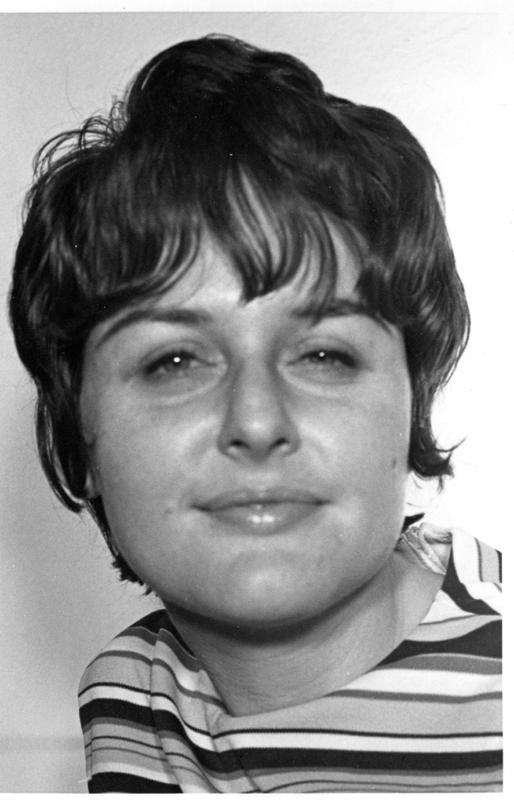
Jesus Christ Superstar at the Universal Amphitheatre with Gail and Evita in Century City?
Looking for the Tate house in Benedict Canyon . . . and finding it (at least the gate)?
Dinners with Farida and Nas at the Hollywood Ol' Spaghetti Factory? In the days when there wasn't an Ol' Spaghetti Factory on every other corner . . .
Coming back from a Las Vegas trip to find that Auntie Flo had fed the girls bacon for the first time in their lives?
Checking out the vanity in Bill and Rich's bathroom--and having Bill come up behind us?
Sundays driving to Palos Verdes to buy strawberries and straw flowers?
Cutting class to drive down to Ports 'o' Call?
The Thanksgiving I removed the pumpkin pie from the oven and dropped it, steaming hot, onto my foot and had to wear socks to Thanksgiving Dinner 'cause I couldn't get my shoe on?
The holidays when Champ realized we had had too many glasses of wine and took the opportunity to take a nap on the bed?
Those Idyllwild weekends where we'd have to call to let work know we were "snowed in" because we couldn't bear to go home?
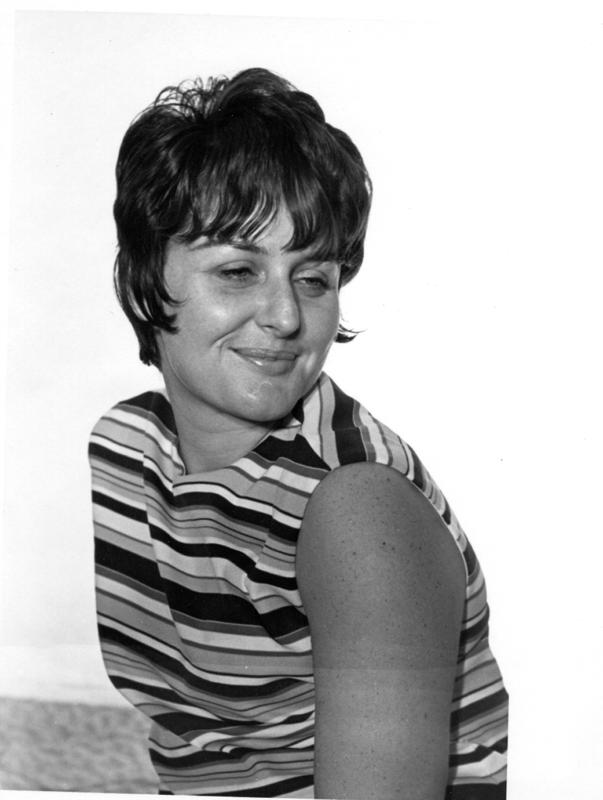
Three-hour telephone conversations?
The purple swan from Nellie?
Driving somewhere--I have no idea where--with Auntie Flo singing Old Macdonald's Farm at the top of our lungs?
The night Abid and I stayed overnight at the El Molino apartment and we slept in your bed, awaking absolutely petrified to find Poopsie staring at me?
Your wonderful Camaro?
Sharing a room at the Wawona Hotel, with a bath down the hall?
You, Doobie and me sitting at my dining room table during your visit to Bass Lake, watching the deer frolic outside?

If you never remember anything else, please know that I love you and cherish the years and the friendship we've shared. May this birthday be the best of all birthdays to date . . . and the least of those to come.
I love you, my friend.
meeeeeeeeeeeeeeeeeeeeeeeeeeeeeeeeeeee
Thursday, September 17, 2009
Every Day Is A Gift
I had two choices this morning: get my rear out of bed really early and head to Yosemite to try to get some sunrise photos or stay home and do housework. Because a meeting of the Yosemite Sierra Visitors' Bureau was scheduled for 2:00 p.m. in Oakhurst, my time was limited, so that factor added to the decision-making process.
The choice should have been easy, right?
Actually it was. I chose the housework. It's been several weeks since I've slept well, and last night, for some reason, was very restful. I awoke at 5:15 a.m. and decided to sleep a bit longer. It was absolute heaven.
Even the dusting, mopping and vacuuming were relaxing in a strange sort of way, once I got going. The animals weren't quite sure what was happening because they don't see this kind of activity very often, but they managed.
Once done with the vacuum, I took its reservoir outside to empty the water--and came face-to-face with "our" herd of deer. Yosemite Lakes Park is overrun with mule deer. They are pests, and they trample all the gardens they can get to . . . the ones they don't prune to the ground, that is. That being said, I still have an affinity for the beasts . . . their twitching ears, their massive brown eyes, their wagging tails. Despite their negatives, for me they have an undeniable beauty. The herd that often hangs out at our house consists of two does, each with two fawns and usually one or two additional does who accompany them.
Quite often I'll come home to find one of the does and her babies camped next to the house taking a nap. Of course they jump up and scamper off as soon as the car comes up the driveway. Although I often carry my camera with me, I never seem to have it when "the kids" are around.
That's why today was a gift.
I was home; the deer were far enough away that I didn't startle them when I walked outside. I quickly went back inside, grabbed the Canon and the 75-300 mm and shot away.

Although the lighting conditions weren't ideal, and the guys were in the shade, I got a few shots to play around with. Rather than running off, they all stood around and allowed me to shoot away. One of the fawns actually had laid down in the field and continued to stay there. Unfortunately my photos of her were out-of-focus and unusable.


When the herd decided to leave, I came back in the house and prepared to download the photos. As I looked out the dining room window, a raccoon ambled by, outside the fence. There was no way I could position myself to get a picture, but I watched him until he disappeared into the neighbor's yard.
I love living here, in the mountains/foothills. What a blessing each day is.
The choice should have been easy, right?
Actually it was. I chose the housework. It's been several weeks since I've slept well, and last night, for some reason, was very restful. I awoke at 5:15 a.m. and decided to sleep a bit longer. It was absolute heaven.
Even the dusting, mopping and vacuuming were relaxing in a strange sort of way, once I got going. The animals weren't quite sure what was happening because they don't see this kind of activity very often, but they managed.
Once done with the vacuum, I took its reservoir outside to empty the water--and came face-to-face with "our" herd of deer. Yosemite Lakes Park is overrun with mule deer. They are pests, and they trample all the gardens they can get to . . . the ones they don't prune to the ground, that is. That being said, I still have an affinity for the beasts . . . their twitching ears, their massive brown eyes, their wagging tails. Despite their negatives, for me they have an undeniable beauty. The herd that often hangs out at our house consists of two does, each with two fawns and usually one or two additional does who accompany them.
Quite often I'll come home to find one of the does and her babies camped next to the house taking a nap. Of course they jump up and scamper off as soon as the car comes up the driveway. Although I often carry my camera with me, I never seem to have it when "the kids" are around.
That's why today was a gift.
I was home; the deer were far enough away that I didn't startle them when I walked outside. I quickly went back inside, grabbed the Canon and the 75-300 mm and shot away.

Although the lighting conditions weren't ideal, and the guys were in the shade, I got a few shots to play around with. Rather than running off, they all stood around and allowed me to shoot away. One of the fawns actually had laid down in the field and continued to stay there. Unfortunately my photos of her were out-of-focus and unusable.


When the herd decided to leave, I came back in the house and prepared to download the photos. As I looked out the dining room window, a raccoon ambled by, outside the fence. There was no way I could position myself to get a picture, but I watched him until he disappeared into the neighbor's yard.
I love living here, in the mountains/foothills. What a blessing each day is.
Wednesday, September 16, 2009
Inspiration - CBS Sunday Morning
You probably realize by now that I'm not shy about sharing what I'm passionate about. When one of those life-altering moments that occur all too rarely happen, I talk about it. Like last Sunday morning.
I'm not a huge television fan, and in fact lived happily for over two years with no television at all when my cable broke, and I elected not to repair it. The one program I am absolutely wedded to is the CBS news program, CBS Sunday Morning, which just celebrated its 30th anniversary.
Over the years I've enjoyed many of the segments they've aired, but one they broadcast last Sunday, September 13, was one of the best, first aired on CBS Evening News then spotlighted on CBS Sunday Morning.
It's the heartwarming story of a grizzled and grouchy Phoenix cabbie, Tom, who gets lost going to pick up a client. (Apparently he regularly gets lost!) He arrives thirty minutes late. He and his rider, Rita, get off to a rocky start as he takes her to a medical clinic for an appointment. The rider declines to give the driver a tip and hopes never to see him again. Tom feels the same. Of course fate pairs them over and over, and the cabbie decides to find out why she goes so regularly to a kidney dialysis clinic. What he learns about dialysis gives him a new perspective toward Rita. She needs a new kidney, and up to now she's been unable to find a match. Something about Rita and her story touches Tom, and he tells Rita he'll get tested. She doesn't expect him to follow through. Both doubt he'd be a match even if he does since every member of Rita's own family has failed the test. He keeps his word, though, and the doctors tell Rita and Tom that if they were any closer matched, they'd be siblings. They've got a date with the surgeon in December, 2009. In an adjunct to this story, Tom realized another benefit from his gift. Tom's daughter, lost to him for 30 years as a result of a bitter divorce, contacts her father and introduces him to his grandchildren. Told with grace, wit and empathy, the story left me in tears.
I'm proud to say I've been a CSM follower since the beginning. I've traveled with Charles Kuralt all over the US, followed all the human interest stories, laughed at Bill Geist's slices of life, learned details about the lives of singers and painters and politicians and just-plain-people. They seem to get to the heart of whatever story they're covering and celebrate the best (or worst) in their target of the moment.
I cried when Charles Osgood took over the CSM reins--and even harder when Charles Kuralt died, much too soon, not too long thereafter.Although Charles O has grown on me over the years, I still miss the original Charlie K. Probably always will.
In a way, I credit CSM for the start of my writing career, as a result of a formerly-regular segment called "Postcards from Nebraska" written/produced by Rodger Welsch. That segment fast became dear to my heart because my parents grew up in Clarks and Central City, Nebraska, not terribly far from Welsch's town of Dannebrog. Although I've visited my parents' home state a few times, I've never lived there. Something, though, draws me to the rural life they lived and that Welsch described in his segments. One postcard, in particular, hit home in a way no other accomplished. Welsch talked about how high school kids spent months of their summers helping their parents and neighbors in the corn fields that so dominate the Nebraska countryside. He described particular techniques that are used to make sure the corn pollinates properly.
I don't know why that segment captured my imagination, but it sparked a story I called "Coming Home" which I wrote early on in my classes with Fresno writing teacher Elnora King. Although it was far from an overnight success with Elnora, it proved to me (and eventually to her) that my writing had potential. That was not the first story I published, and eventually my firiend Virginia Walton Pilegard--who has actual farming/ranching experience--helped polish it up. When we submitted it to the editor at Sterling Macfadden Publications' True Love magazine, we got a call. "We want to buy your story, and I want you to know that this is the first time EVER that we have decided to buy a story as soon as we read it."
It's important to mention that by this time, in conjunction with my first writing partner, Sunny Baker, I had a track record with Sterling Macfadden. We'd sold some twelve stories to the "confession" market. It was not by accident that they looked at "Coming Home." But it touched my heart that those editors caught the love I poured into that tale and eventually published the story Virginia and I wrote.
Since that market seems to have dried up in the years since I stopped writing, it's not likely the Kidney-Cabbie tale will end up as a short story, but it's good for the soul (my soul, at least) to see that the compassion embodied in the tale still exists.
As Ghandi says, we must be the change we wish to see in the world.
I'm not a huge television fan, and in fact lived happily for over two years with no television at all when my cable broke, and I elected not to repair it. The one program I am absolutely wedded to is the CBS news program, CBS Sunday Morning, which just celebrated its 30th anniversary.
Over the years I've enjoyed many of the segments they've aired, but one they broadcast last Sunday, September 13, was one of the best, first aired on CBS Evening News then spotlighted on CBS Sunday Morning.
It's the heartwarming story of a grizzled and grouchy Phoenix cabbie, Tom, who gets lost going to pick up a client. (Apparently he regularly gets lost!) He arrives thirty minutes late. He and his rider, Rita, get off to a rocky start as he takes her to a medical clinic for an appointment. The rider declines to give the driver a tip and hopes never to see him again. Tom feels the same. Of course fate pairs them over and over, and the cabbie decides to find out why she goes so regularly to a kidney dialysis clinic. What he learns about dialysis gives him a new perspective toward Rita. She needs a new kidney, and up to now she's been unable to find a match. Something about Rita and her story touches Tom, and he tells Rita he'll get tested. She doesn't expect him to follow through. Both doubt he'd be a match even if he does since every member of Rita's own family has failed the test. He keeps his word, though, and the doctors tell Rita and Tom that if they were any closer matched, they'd be siblings. They've got a date with the surgeon in December, 2009. In an adjunct to this story, Tom realized another benefit from his gift. Tom's daughter, lost to him for 30 years as a result of a bitter divorce, contacts her father and introduces him to his grandchildren. Told with grace, wit and empathy, the story left me in tears.
I'm proud to say I've been a CSM follower since the beginning. I've traveled with Charles Kuralt all over the US, followed all the human interest stories, laughed at Bill Geist's slices of life, learned details about the lives of singers and painters and politicians and just-plain-people. They seem to get to the heart of whatever story they're covering and celebrate the best (or worst) in their target of the moment.
I cried when Charles Osgood took over the CSM reins--and even harder when Charles Kuralt died, much too soon, not too long thereafter.Although Charles O has grown on me over the years, I still miss the original Charlie K. Probably always will.
In a way, I credit CSM for the start of my writing career, as a result of a formerly-regular segment called "Postcards from Nebraska" written/produced by Rodger Welsch. That segment fast became dear to my heart because my parents grew up in Clarks and Central City, Nebraska, not terribly far from Welsch's town of Dannebrog. Although I've visited my parents' home state a few times, I've never lived there. Something, though, draws me to the rural life they lived and that Welsch described in his segments. One postcard, in particular, hit home in a way no other accomplished. Welsch talked about how high school kids spent months of their summers helping their parents and neighbors in the corn fields that so dominate the Nebraska countryside. He described particular techniques that are used to make sure the corn pollinates properly.
I don't know why that segment captured my imagination, but it sparked a story I called "Coming Home" which I wrote early on in my classes with Fresno writing teacher Elnora King. Although it was far from an overnight success with Elnora, it proved to me (and eventually to her) that my writing had potential. That was not the first story I published, and eventually my firiend Virginia Walton Pilegard--who has actual farming/ranching experience--helped polish it up. When we submitted it to the editor at Sterling Macfadden Publications' True Love magazine, we got a call. "We want to buy your story, and I want you to know that this is the first time EVER that we have decided to buy a story as soon as we read it."
It's important to mention that by this time, in conjunction with my first writing partner, Sunny Baker, I had a track record with Sterling Macfadden. We'd sold some twelve stories to the "confession" market. It was not by accident that they looked at "Coming Home." But it touched my heart that those editors caught the love I poured into that tale and eventually published the story Virginia and I wrote.
Since that market seems to have dried up in the years since I stopped writing, it's not likely the Kidney-Cabbie tale will end up as a short story, but it's good for the soul (my soul, at least) to see that the compassion embodied in the tale still exists.
As Ghandi says, we must be the change we wish to see in the world.
Tuesday, September 15, 2009
Khyber Dreams: Chapter 5 - Keeping 'em Straight
Notes to readers: I have included links to terms and places that you might not be familiar with, in case you want to learn more about them.
Any details or customs I relate reflect my experiences and my knowledge at the time I was in Pakistan, in 1968. I confess that memories have faded and some details are not as sharp as I'd like. I tell the story as accurately as I possibly can given the 41 years that have elapsed.
As I introduce members of Abid's family, I should let you know that it is not customary to call relatives, particularly older relatives, simply by their first names. Brothers would be addressed as "bhai" and sisters as "bhabi," as marks of respect, for example, "bhai Tajammul" and "bhabi Aijaz." I have eliminated those titles in this narrative, but the respect remains, all the same.
Luckily I didn't have to learn all nine at once. Three of his sisters and their families lived in outlying towns, so I would meet Jamilah in Lahore, Razia in Multan and Taj in Peshawar later in our stay.
Of course, I'd met Abid's sister, Safia, as soon as we reached Britto Road. I'll write much more about her later because, of all the family members, I probably became closest to her over the months we stayed in Pakistan and throughout the balance of my marriage. She and her husband, Nayyir, even attended Farida's wedding in 2001, after I separated from Abid and moved to Bass Lake.
That left the brothers:


At the time of our arrival in Karachi, Tajammul and Aijaz were in the process of building a new residence in the suburb of North Nazimabad, a new development where some of the most prosperous Pakistani citizens of that era lived. The home was large, open and airy, two stories, with a spiral staircase connecting the floors. When complete, it would be a house to rival United States mansions. That wouldn't happen for a long time.

Construction in Pakistan takes place over years, not months, so the house was nowhere near complete when we first saw it. A rudimentary kitchen had been installed upstairs in what would later become a bedroom as the modern, efficient "official" kitchen took shape downstairs. The servants prepared meals upstairs, carried them downstairs to serve and then transported dishes and utensils back upstairs to be washed. It was not an easy process, made more challenging by the work schedules both Tajammul and Aijaz observed. It seemed like there was never a time of day when one meal or another wasn't fin preparation.
The situation would probably have been unbearable if it hadn't been for the quiet, moderating temperaments of both Tajammul and Aijaz. They brought calm to what would otherwise have been a tempestuous existence.
As I recall, the downstairs kitchen finally became serviceable shortly before our departure.
No matter the chaos that sometimes reigned over Tajammul's house, it was always a haven for us, particularly during the last month of our stay. And best of all, it had western plumbing.
Next Episode: The Homeboys
Any details or customs I relate reflect my experiences and my knowledge at the time I was in Pakistan, in 1968. I confess that memories have faded and some details are not as sharp as I'd like. I tell the story as accurately as I possibly can given the 41 years that have elapsed.
As I introduce members of Abid's family, I should let you know that it is not customary to call relatives, particularly older relatives, simply by their first names. Brothers would be addressed as "bhai" and sisters as "bhabi," as marks of respect, for example, "bhai Tajammul" and "bhabi Aijaz." I have eliminated those titles in this narrative, but the respect remains, all the same.
***
Abid comes from a family of ten children: four sisters and six brothers, not to mention an unbelievable amount of aunts, uncles, nieces, nephews and cousins. I'd been hearing about all the brothers and sisters before we left the States. Now it was time to put faces to names and hope to heck I could keep them all straight.Luckily I didn't have to learn all nine at once. Three of his sisters and their families lived in outlying towns, so I would meet Jamilah in Lahore, Razia in Multan and Taj in Peshawar later in our stay.
Of course, I'd met Abid's sister, Safia, as soon as we reached Britto Road. I'll write much more about her later because, of all the family members, I probably became closest to her over the months we stayed in Pakistan and throughout the balance of my marriage. She and her husband, Nayyir, even attended Farida's wedding in 2001, after I separated from Abid and moved to Bass Lake.
That left the brothers:
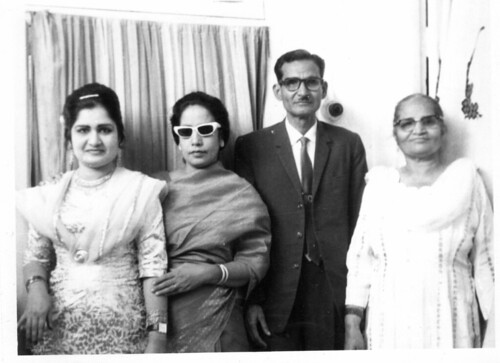
- Akhtar, the oldest. This picture is of sister Safia, Akhtar's wife (whose name I don't remember), Akhtar, and his mother. I can't remember ever visiting his home. He'd always come to visit us at his mother's home.
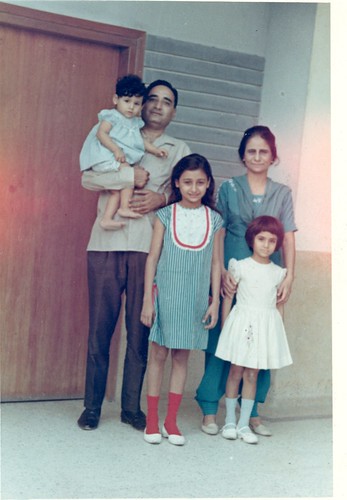
- Tajammul, who is a doctor and the owner of several hospitals in the Karachi area. He married Aijaz, who is also a doctor. She is the daughter of Dr.Sir Ziauddin Ahmed, a prominent, well-respected physician and educator, for whom Tajammul and Aijaz named their first hospital and the teaching university the family operates. They raised four children, Asim (not in the photo) and Rubina (here standing between her mother and father), who are also doctors and well-known in their fields. As you can see, they were children at the time Abid and I visited. Sabina (in front of Aijaz) and Arif (in arms) are the youngest of their children.
At the time of our arrival in Karachi, Tajammul and Aijaz were in the process of building a new residence in the suburb of North Nazimabad, a new development where some of the most prosperous Pakistani citizens of that era lived. The home was large, open and airy, two stories, with a spiral staircase connecting the floors. When complete, it would be a house to rival United States mansions. That wouldn't happen for a long time.
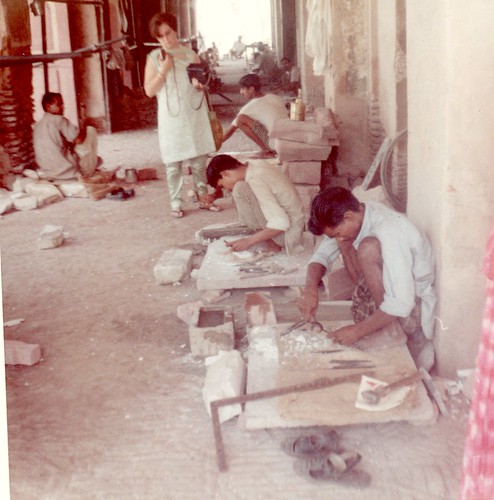
Construction in Pakistan takes place over years, not months, so the house was nowhere near complete when we first saw it. A rudimentary kitchen had been installed upstairs in what would later become a bedroom as the modern, efficient "official" kitchen took shape downstairs. The servants prepared meals upstairs, carried them downstairs to serve and then transported dishes and utensils back upstairs to be washed. It was not an easy process, made more challenging by the work schedules both Tajammul and Aijaz observed. It seemed like there was never a time of day when one meal or another wasn't fin preparation.
The situation would probably have been unbearable if it hadn't been for the quiet, moderating temperaments of both Tajammul and Aijaz. They brought calm to what would otherwise have been a tempestuous existence.
As I recall, the downstairs kitchen finally became serviceable shortly before our departure.
No matter the chaos that sometimes reigned over Tajammul's house, it was always a haven for us, particularly during the last month of our stay. And best of all, it had western plumbing.
Next Episode: The Homeboys
Monday, September 14, 2009
Focus, focus, focus
It isn't often that I set out with the express intention of taking photographs. A period set aside for picture-taking. Friday was that day.
Of course in a determined effort to make every moment count, Carol and I included a trip to Fresno. We started off with a car wash at our favorite Chevron station at Blackstone and Minarets (or thereabouts . . .). They do a great pre-wash with soapy water and a brush, and they always do it with a smile. Then a claustrophobic ride through pink suds and hot air, emerging into the sunlight sparkling like the showroom floor.
We continued on to breakfast at Mimi's, figuring we'd be seated right away since it was nearly 10:00 a.m. No such luck. We still had to wait. As we sat, two ladies asked if they could join us.
"Sure, please do" we said, and they pulled up chairs.
They proceeded to introduce themselves and told us they'd just returned from a short vacation to Mt. Shasta. That certainly broke the ice since Mt. Shasta is something Carol saw often during her years of driving to and from her home in Brookings, OR, and I fell in love with the peak during driving trips to Oregon and Washington with Shevy. This trend toward instantaneous friendships seems to be a hallmark of my "new life," boosted by my volunteer time at Yosemite Sierra Visitors' Bureau. This previously-shy individual now doesn't hesitate to talk to people, whether on the trail or in a restaurant. Somehow that must show on my face or in my demeanor, as people approach me, as these ladies did. Bless you, Shevy, for teaching me there are no strangers.
After a quick stop at Cost Plus to barter for a bargain end table, Carol and I headed up the mountain to Shaver and Huntington Lakes. Carol had never been there, and it had been years for me. Carol recently acquired a new camera (a Panasonic Lumix DMC-FZ28S), based on recommendations from Carol's photographer friend Miguel. When Carol told me what she was thinking, I thought of the marvelous photos my friend Kaye Duncan of Portland takes with her Panasonic. Kaye's photos shared via Flickr always inspire me. The Panasonic, considered a high-end member of the point-and-shoot category, takes photos every bit as as detailed and sharp as my DSLR--just doesn't have the removable lenses. If I were going to go for a point-and-shoot, that'd be the one, and if it weren't for Kaye, I'd never have known about it.

My self-stated intent for the photo shoot was to learn to use my camera's focusing apparatus. Farida and Jason, ever my teachers, showed me how to set individual focus points with my Rebel Xs, so I figured I'd try it out. Bingo! Success! A couple of my better results are shown on my photoblog, Nature's Heart entry for September 11.
The composition may not rival Ansel Adams', but you should be able to tell where my focal point is. Probably 90 per cent of the photos taken that day showed that I'd gotten the idea.

The "fisherpeople" picture was taken with friend Kaye in mind. Her photographs capture lines, angles, perspective and colors and always make me want to see ordinary things (like farmers' markets) in the extraordinary manner she manages to memorialize. Check her out. She's known as ohkayeor on Flickr.
Kaye and I met at ECCO's first Artists' Creative Weekend last Thanksgiving, and I've had the pleasure of following her photos ever since.

Flushed with triumph, I was thrilled when grandson Hunter actually was willing to pose for me on Saturday. With three photographers in the family (four counting him), he sometimes gets a little tired of being our favorite subject, so when he's willing, I'm there.
My vision of becoming the next Annie Lebowitz went down the drain as soon as I downloaded the first batch. They were all blown-out, out of focus, backlit and miserable. Sometimes all in the same picture.
Back to the drawing board.
 By the time the afternoon ended, I'd amassed some semi-acceptable Hunter renderings, a few with focus softer than Farida probably would accept--but I think they show a softer side of Hunter himself.
One of my favorites is shown here. Others are posted at Nature's Heart. I like the bokay, the colors both in the face and the tee shirt, the pensive expression. It's far from perfect . . . but it makes me happy, as does the subject himself.
The best part of a photography passion is that there's always tomorrow, always a next shoot, changing subjects. It also causes you to look at everything through a photographer's lens, observing life in terms of light, color, texture and flow.
Of course in a determined effort to make every moment count, Carol and I included a trip to Fresno. We started off with a car wash at our favorite Chevron station at Blackstone and Minarets (or thereabouts . . .). They do a great pre-wash with soapy water and a brush, and they always do it with a smile. Then a claustrophobic ride through pink suds and hot air, emerging into the sunlight sparkling like the showroom floor.
We continued on to breakfast at Mimi's, figuring we'd be seated right away since it was nearly 10:00 a.m. No such luck. We still had to wait. As we sat, two ladies asked if they could join us.
"Sure, please do" we said, and they pulled up chairs.
They proceeded to introduce themselves and told us they'd just returned from a short vacation to Mt. Shasta. That certainly broke the ice since Mt. Shasta is something Carol saw often during her years of driving to and from her home in Brookings, OR, and I fell in love with the peak during driving trips to Oregon and Washington with Shevy. This trend toward instantaneous friendships seems to be a hallmark of my "new life," boosted by my volunteer time at Yosemite Sierra Visitors' Bureau. This previously-shy individual now doesn't hesitate to talk to people, whether on the trail or in a restaurant. Somehow that must show on my face or in my demeanor, as people approach me, as these ladies did. Bless you, Shevy, for teaching me there are no strangers.
After a quick stop at Cost Plus to barter for a bargain end table, Carol and I headed up the mountain to Shaver and Huntington Lakes. Carol had never been there, and it had been years for me. Carol recently acquired a new camera (a Panasonic Lumix DMC-FZ28S), based on recommendations from Carol's photographer friend Miguel. When Carol told me what she was thinking, I thought of the marvelous photos my friend Kaye Duncan of Portland takes with her Panasonic. Kaye's photos shared via Flickr always inspire me. The Panasonic, considered a high-end member of the point-and-shoot category, takes photos every bit as as detailed and sharp as my DSLR--just doesn't have the removable lenses. If I were going to go for a point-and-shoot, that'd be the one, and if it weren't for Kaye, I'd never have known about it.
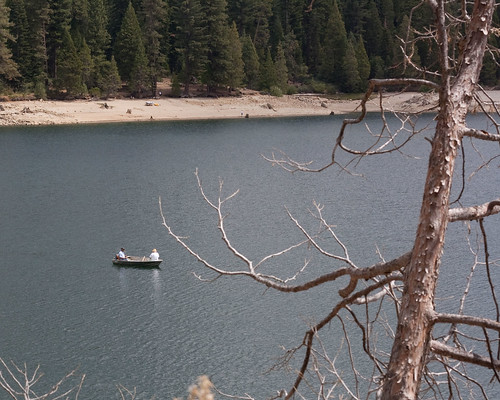
My self-stated intent for the photo shoot was to learn to use my camera's focusing apparatus. Farida and Jason, ever my teachers, showed me how to set individual focus points with my Rebel Xs, so I figured I'd try it out. Bingo! Success! A couple of my better results are shown on my photoblog, Nature's Heart entry for September 11.
The composition may not rival Ansel Adams', but you should be able to tell where my focal point is. Probably 90 per cent of the photos taken that day showed that I'd gotten the idea.
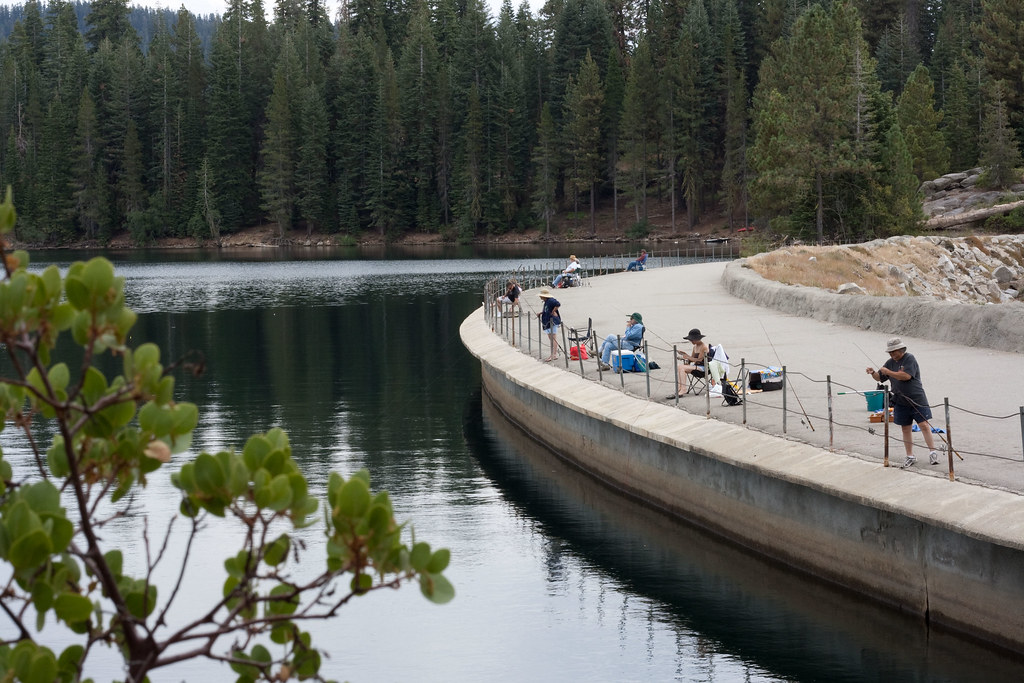
The "fisherpeople" picture was taken with friend Kaye in mind. Her photographs capture lines, angles, perspective and colors and always make me want to see ordinary things (like farmers' markets) in the extraordinary manner she manages to memorialize. Check her out. She's known as ohkayeor on Flickr.
Kaye and I met at ECCO's first Artists' Creative Weekend last Thanksgiving, and I've had the pleasure of following her photos ever since.
***
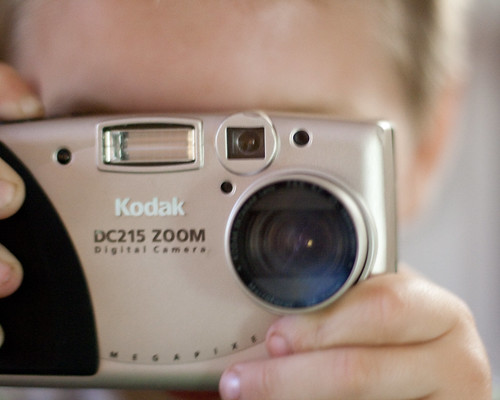
Flushed with triumph, I was thrilled when grandson Hunter actually was willing to pose for me on Saturday. With three photographers in the family (four counting him), he sometimes gets a little tired of being our favorite subject, so when he's willing, I'm there.
My vision of becoming the next Annie Lebowitz went down the drain as soon as I downloaded the first batch. They were all blown-out, out of focus, backlit and miserable. Sometimes all in the same picture.
Back to the drawing board.

One of my favorites is shown here. Others are posted at Nature's Heart. I like the bokay, the colors both in the face and the tee shirt, the pensive expression. It's far from perfect . . . but it makes me happy, as does the subject himself.
The best part of a photography passion is that there's always tomorrow, always a next shoot, changing subjects. It also causes you to look at everything through a photographer's lens, observing life in terms of light, color, texture and flow.
Sunday, September 13, 2009
Khyber Dreams: Chapter 4 - An Intro to Pakistani Life
I was completely blown away by the welcome Abid, Farida and I received when we arrived at Abid's childhood home on Britto Road. His parents lived there, along with Abid's brother Altaf and Altaf's wife and baby and Abid's two younger brothers, Akhlaq and Munawwar.
During the years Abid and I had been married I'd learned a bit about Pakistani customs. I knew that Pakistani elders depended on their children and grandchildren to take care of them as they aged. In the Pakistani version of Social Security, it was (and is) completely normal for adult children (and their children) to share a home with elders. Abid's parents appeared to be in their late 70's and slowing down. Having their children around allowed them to continue to live in the home they'd occupied for many years. In addition Abid's sister Safia, who had her own home with her husband in the area known as Defense Society, came to her mother's home daily to make sure everything was okay. She would help prepare the food and take some meals with them.
While we "Americans" often prided ourselves on our acceptance of other ethnicities, I'm embarrassed to admit that my own family had not been welcoming to Abid. To the day she died, my mother never completely accepted him, although she cherished her two granddaughters. Here his family was, opening their arms to me and greeting Abid as if he'd never been away. I honestly had not expected that, and I was grateful.
As soon as we'd lugged our suitcases upstairs to the living space, Abid and Safia gave me a tour of the house. I was struck by how similarly it was arranged to Mexico City houses I'd lived in. Built in a square with a large open area in the middle, the various rooms all opened onto the two-story-deep central "courtyard."
The rooms were large, the walls thick and stuccoed (very like southwestern adobes) to insulate against the heat and encourage air flow in a country where temperatures regularly reached into the 90's and beyond . . . with 90% humidity. As I remember, there was a living area, a kitchen, another living area which Safia used as a painting studio, a bedroom where Abid, Farida and I parked our stuff, another small bedroom, which was the only air-conditioned space in the house.
After all these years I can't remember where Abid's parents slept. I suspect the bedroom they assigned to us was theirs and that they probably slept on pallets in the living area during our stay. They were always awake before me during our entire stay, so I can't say for sure.
Abid rushed to show me the bedroom he occupied before he left for the States, atop the roof of the house and accessed by a set of rickety stairs. For years he'd told me about it.
An accomplished athlete, Abid loved competing at cricket, soccer and bicycle races. His parents, however, saw no value in sports and forbade him to participate in anything not having to do with book learning. The rooftop room allowed him to escape whenever he wanted by shinnying down the mango tree that hugged the side of the house. Even if his parents discovered his absence, they couldn't do anything about it until he returned. They'd chastise him, he'd listen--and do it all over again.
One area I remember vividly is the bathroom. And I use the term "bathroom" advisedly. Although I'm sure sanitary facilities have changed over the past 40 years, in many homes of that time, the "toilet" was an old-fashioned hole in the ground. I hadn't known about this in advance, so it took a few moments (!) to get my mind around the facilities. I've never been known for my coordination, so the prospect of having to squat on my haunches was a bit daunting. I adjusted, however, although I never liked it and never accomplished it with any grace.
Both Abid's sister Safia and brother Tajammul had recently built or remodeled their houses prior to our arrival and both included western bathroom facilities in their construction. I swear they timed the building to coincide with our visit. That's how accommodating they were to this complete stranger. Although Tajammul's house hadn't been fully completed by our arrival, he and his family made sure it was most comfortable when we visited or stayed there.
As a concession to my western sensibilities the family provided toilet paper for my use. The usual way of cleaning oneself was by use of a water pitcher. (I'll leave it to your imagination as to how that works.) That's a big reason why you won't see Pakistanis eating with their left hands . . . the left hand is for cleaning, the right is for eating.
The shower occupied a tiny room next to the toilet. I can't remember how or if the water was heated. Karachi weather was hot and clammy, so a hot shower probably was not necessary and not desired. In fact, as soon as I'd exit the shower, the stifling humidity made me crave another. I never felt really clean for more than a minute during my entire time there, except during our visit in Peshawar toward the end of our stay.
I came to admire the agility of Pakistani women (and men) who could sit on their haunches as they worked, whether it was cleaning or cooking. Each morning Abid's mother would squat for an hour as she prepared chapattis from scratch and cooked them over what in Mexico was called a comal, a flat piece of metal or cast iron set over an open fire.I have no idea what it was called in Urdu, the language of Pakistan.
Perhaps the trickiest part of my earliest days in Karachi was figuring out who was who in Abid's family. He is one of ten children, and all of them except for three sisters lived in Karachi. A parade of brothers and their families appeared over the next few hours, anxious to welcome Abid home and meet his family.
Next episode: Keeping 'em straight
During the years Abid and I had been married I'd learned a bit about Pakistani customs. I knew that Pakistani elders depended on their children and grandchildren to take care of them as they aged. In the Pakistani version of Social Security, it was (and is) completely normal for adult children (and their children) to share a home with elders. Abid's parents appeared to be in their late 70's and slowing down. Having their children around allowed them to continue to live in the home they'd occupied for many years. In addition Abid's sister Safia, who had her own home with her husband in the area known as Defense Society, came to her mother's home daily to make sure everything was okay. She would help prepare the food and take some meals with them.
While we "Americans" often prided ourselves on our acceptance of other ethnicities, I'm embarrassed to admit that my own family had not been welcoming to Abid. To the day she died, my mother never completely accepted him, although she cherished her two granddaughters. Here his family was, opening their arms to me and greeting Abid as if he'd never been away. I honestly had not expected that, and I was grateful.
As soon as we'd lugged our suitcases upstairs to the living space, Abid and Safia gave me a tour of the house. I was struck by how similarly it was arranged to Mexico City houses I'd lived in. Built in a square with a large open area in the middle, the various rooms all opened onto the two-story-deep central "courtyard."
The rooms were large, the walls thick and stuccoed (very like southwestern adobes) to insulate against the heat and encourage air flow in a country where temperatures regularly reached into the 90's and beyond . . . with 90% humidity. As I remember, there was a living area, a kitchen, another living area which Safia used as a painting studio, a bedroom where Abid, Farida and I parked our stuff, another small bedroom, which was the only air-conditioned space in the house.
After all these years I can't remember where Abid's parents slept. I suspect the bedroom they assigned to us was theirs and that they probably slept on pallets in the living area during our stay. They were always awake before me during our entire stay, so I can't say for sure.
Abid rushed to show me the bedroom he occupied before he left for the States, atop the roof of the house and accessed by a set of rickety stairs. For years he'd told me about it.
An accomplished athlete, Abid loved competing at cricket, soccer and bicycle races. His parents, however, saw no value in sports and forbade him to participate in anything not having to do with book learning. The rooftop room allowed him to escape whenever he wanted by shinnying down the mango tree that hugged the side of the house. Even if his parents discovered his absence, they couldn't do anything about it until he returned. They'd chastise him, he'd listen--and do it all over again.
One area I remember vividly is the bathroom. And I use the term "bathroom" advisedly. Although I'm sure sanitary facilities have changed over the past 40 years, in many homes of that time, the "toilet" was an old-fashioned hole in the ground. I hadn't known about this in advance, so it took a few moments (!) to get my mind around the facilities. I've never been known for my coordination, so the prospect of having to squat on my haunches was a bit daunting. I adjusted, however, although I never liked it and never accomplished it with any grace.
Both Abid's sister Safia and brother Tajammul had recently built or remodeled their houses prior to our arrival and both included western bathroom facilities in their construction. I swear they timed the building to coincide with our visit. That's how accommodating they were to this complete stranger. Although Tajammul's house hadn't been fully completed by our arrival, he and his family made sure it was most comfortable when we visited or stayed there.
As a concession to my western sensibilities the family provided toilet paper for my use. The usual way of cleaning oneself was by use of a water pitcher. (I'll leave it to your imagination as to how that works.) That's a big reason why you won't see Pakistanis eating with their left hands . . . the left hand is for cleaning, the right is for eating.
The shower occupied a tiny room next to the toilet. I can't remember how or if the water was heated. Karachi weather was hot and clammy, so a hot shower probably was not necessary and not desired. In fact, as soon as I'd exit the shower, the stifling humidity made me crave another. I never felt really clean for more than a minute during my entire time there, except during our visit in Peshawar toward the end of our stay.
I came to admire the agility of Pakistani women (and men) who could sit on their haunches as they worked, whether it was cleaning or cooking. Each morning Abid's mother would squat for an hour as she prepared chapattis from scratch and cooked them over what in Mexico was called a comal, a flat piece of metal or cast iron set over an open fire.I have no idea what it was called in Urdu, the language of Pakistan.
Perhaps the trickiest part of my earliest days in Karachi was figuring out who was who in Abid's family. He is one of ten children, and all of them except for three sisters lived in Karachi. A parade of brothers and their families appeared over the next few hours, anxious to welcome Abid home and meet his family.
Next episode: Keeping 'em straight
Subscribe to:
Posts (Atom)